
Austin, Texas · homes & architecture
How an Austin house gets its look
Not a listings portal and not a gossip column, a field guide to the residences themselves. Why a downtown block holds eleven Victorians, why the central streets run to bungalows, and what the newest houses borrow from the oldest. The styles, the eras, and the limestone underneath.
The through-line
A city you can read off its porches
Austin wears its history on the street. A ten-minute walk through the central neighborhoods takes you past a cattleman's Victorian, a railroad-era cottage, a Craftsman bungalow with its low porch and tapered columns, a 1950s ranch, and a brand-new metal-and-cedar box, often on the same block, under the same live oaks. The city never tore down one era to build the next, so the layers are all still legible.
Victorian downtown blocksCraftsman the bungalow beltRanch & modern post-war to nowLimestone & cedar the local palette
These pages are written the way you'd keep notes on your own neighborhood, curious about the buildings, respectful of the people who live in them. We write about landmarks, documented historic districts, and the styles anyone can see from the sidewalk. We don't publish private residents' homes or addresses.
The building eras
The styles that built the city
Four broad periods account for most of what you'll see. None of them ever fully went away.
Victorian & late-1800s
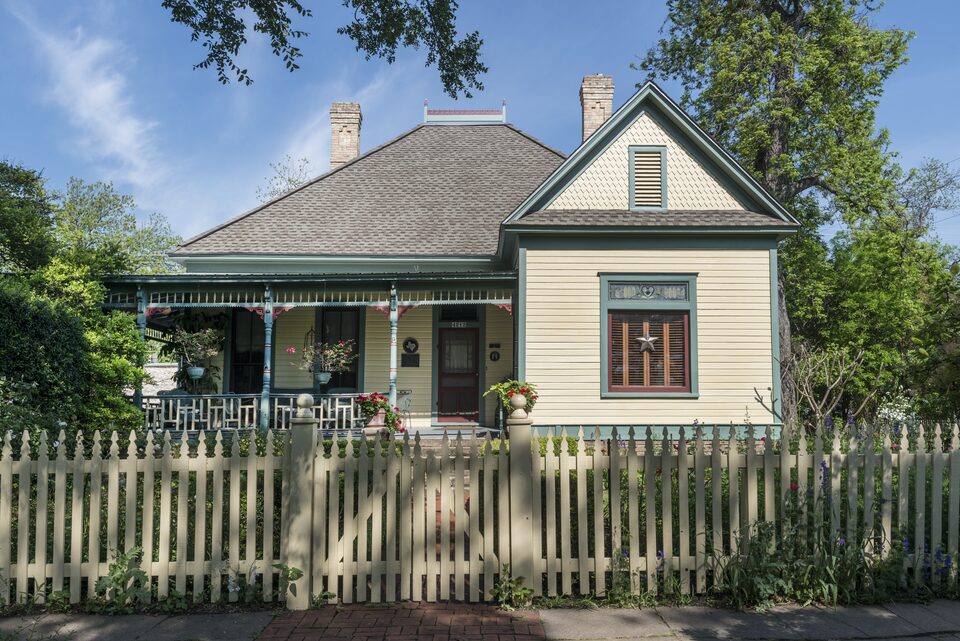
Austin's oldest grand houses are high Victorian, steep gables, bay windows, carved porch trim, and brick or painted wood. The Bremond Block downtown preserves a cluster of them built between the 1850s and 1910 for the city's merchant families. Smaller versions, the folk-Victorian cottage, fill the early streetcar neighborhoods.
Craftsman bungalow
The style that defines central Austin. From roughly 1910 to 1930 the bungalow was the default: a single story and a half, a deep front porch on battered columns, exposed rafter tails, and a low, welcoming roofline. Hyde Park, Travis Heights, and the near-east side are built from them, and they remain the most sought-after old houses in town.
Ranch, mid-century & modern
Post-war Austin spread outward in long, low ranch houses with carports and picture windows. From the 1990s on, a distinct contemporary vernacular took hold, flat or shed roofs, standing-seam metal, cedar, and big glass, tuned to the heat and the hills. The newest infill homes are its latest chapter.
The bungalow belt
Hyde Park, where the cottage set the pattern
Laid out in 1891 as one of Austin's first planned suburbs, Hyde Park became the template for the walkable, tree-shaded neighborhood the whole city now prizes. Its frame cottages and Craftsman bungalows, modest, porch-forward, close to the sidewalk, are protected today as a local historic district. The Texas star in a transom window is practically a neighborhood signature.
The Victorian downtown
A restored house you can actually visit
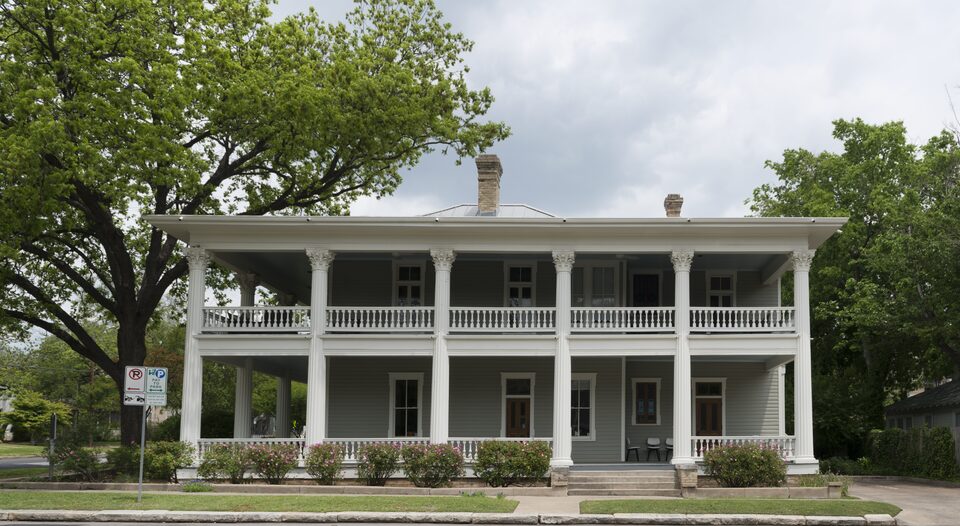
Not every old Austin house is behind a private gate. The 1887 Moore-Flack House is a restored Victorian that shows the period's details up close, the fretwork, the tall windows, the wraparound porch, the way a plaque and a sidewalk let you study a building without intruding on anyone's home. Landmarks like it are how we read an era honestly, and they're the ones we write about.
Where the character lives
The districts worth a slow walk
Austin's residential character concentrates in a handful of documented historic districts. Here's what each one is known for.
Hyde Park
The 1891 planned suburb north of the university. Cottages and Craftsman bungalows under a continuous oak canopy, on a tight, walkable grid. The clearest place to see how the bungalow shaped the city.
Clarksville & Old West Austin
West of downtown, a layered district founded by freed people after the Civil War, now a mix of modest 19th-century cottages and grander early-1900s homes along narrow, leafy streets.
Bremond Block
A single downtown block of eleven grand Victorian houses built for the Bremond and Robinson families between the 1850s and 1910 — the densest run of high-Victorian residential architecture in the city.
The new Austin vernacular
What the newest houses are made of
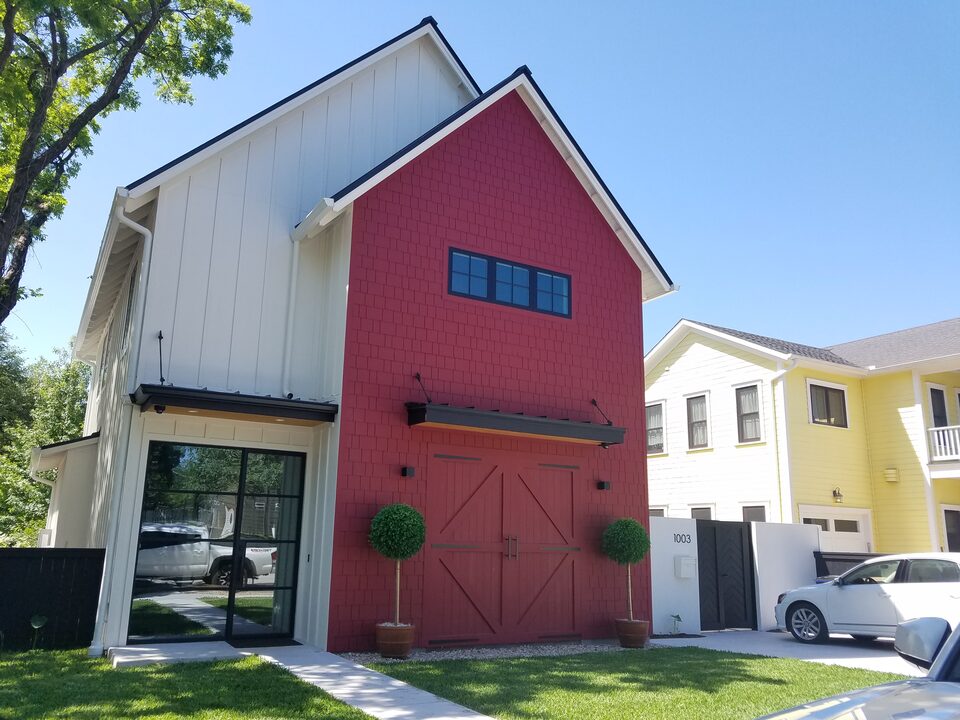
Drive the east side or any teardown-and-rebuild street and you'll see the current Austin house taking shape: a modern-farmhouse silhouette or a clean-lined box, standing-seam metal roofing, board-and-batten or cedar cladding, deep overhangs for the sun, and glass aimed at the trees. It's a climate-tuned descendant of the ranch and the bungalow, porches and shade, updated for how Austin lives now.
The local palette
What Austin builds with
Hill Country limestone
The pale local stone turns up as whole walls, foundations, and garden terraces. It reads as distinctly Central Texan and holds up to the heat, part of why so many homes, old and new, wear it.
Longleaf pine & cedar
Early cottages were framed in old-growth pine; today's houses lean on cedar and board-and-batten. The move from painted clapboard to natural wood is one of the clearest tells of a home's age.
Standing-seam metal
The ribbed metal roof, once a barn material, became a signature of the modern Austin house, reflective, durable, and a quiet nod to the region's ranch roots.

Read the street
Every block is a timeline
Victorian to bungalow to modern, under the same oaks. Start with the questions people ask about Austin's houses, or follow the news that's reshaping its neighborhoods.
From the news desk
Building & neighborhoods in the news
We clip the construction and neighborhood stories that actually change how Austin looks. A few recent reads:
Who's breaking ground in Austin
The builders putting up the new homes, and the styles they're bringing to the city's growing edges.
A new neighborhood opens in Buda
How a fresh master-planned community south of town takes shape from the first homes up.
How new construction changed rents
What a building boom did to the cost of living, and the neighborhoods it reshaped.
Dig deeper
More on Austin's houses
How Austin got built
From the 1850s merchant Victorians to the post-war ranch boom, the eras that left their mark on the street.
Neighborhood notes
Field notes on the districts where Austin's residential character runs deepest.
The homestead exemption
The one piece of Texas paperwork every owner-occupant should file, and what it saves.